Germany has a dense rail network, and the train is often the easiest way to get around. Here are the words you need for the station, the ticket and the platform, plus the one you will hear most when something goes wrong.
The trains
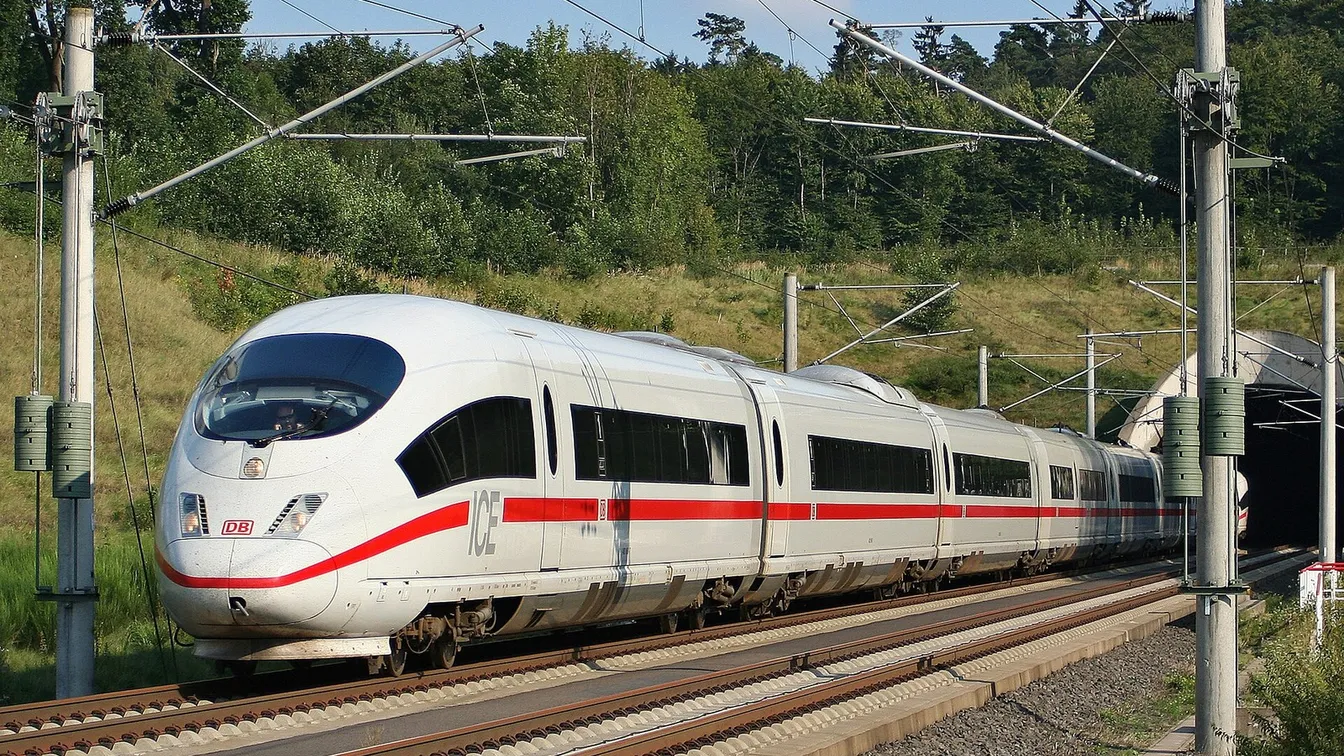
The fast long-distance trains run by Deutsche Bahn (DB) are the ICE (Intercity-Express) and the slower IC. For shorter journeys there are regional trains, and in cities there are three kinds of local transport: the S-Bahn, a suburban train, the U-Bahn, an underground, and the Straßenbahn, a tram. Most big stations are a Hauptbahnhof, often abbreviated Hbf on signs.
For local and regional travel across the country, a monthly pass called the Deutschlandticket is also available.
At the station
You buy a Fahrkarte at a machine, a counter or online, and you check the Fahrplan for the Abfahrt (departure) and the Ankunft (arrival). The train leaves from a numbered Gleis. This word means the track but is also what Germans say for the platform: Gleis 7. The Bahnsteig is the platform itself.
At the counter and on the platform, here are some useful phrases:
Einmal nach Hamburg, bitte.
One ticket to Hamburg, please.
Von welchem Gleis fährt der Zug ab?
Which platform does the train leave from?
In some cities, paper tickets must be validated at a machine before you board. The word is entwerten, so look for the little machines on the platform, and check the local rules.
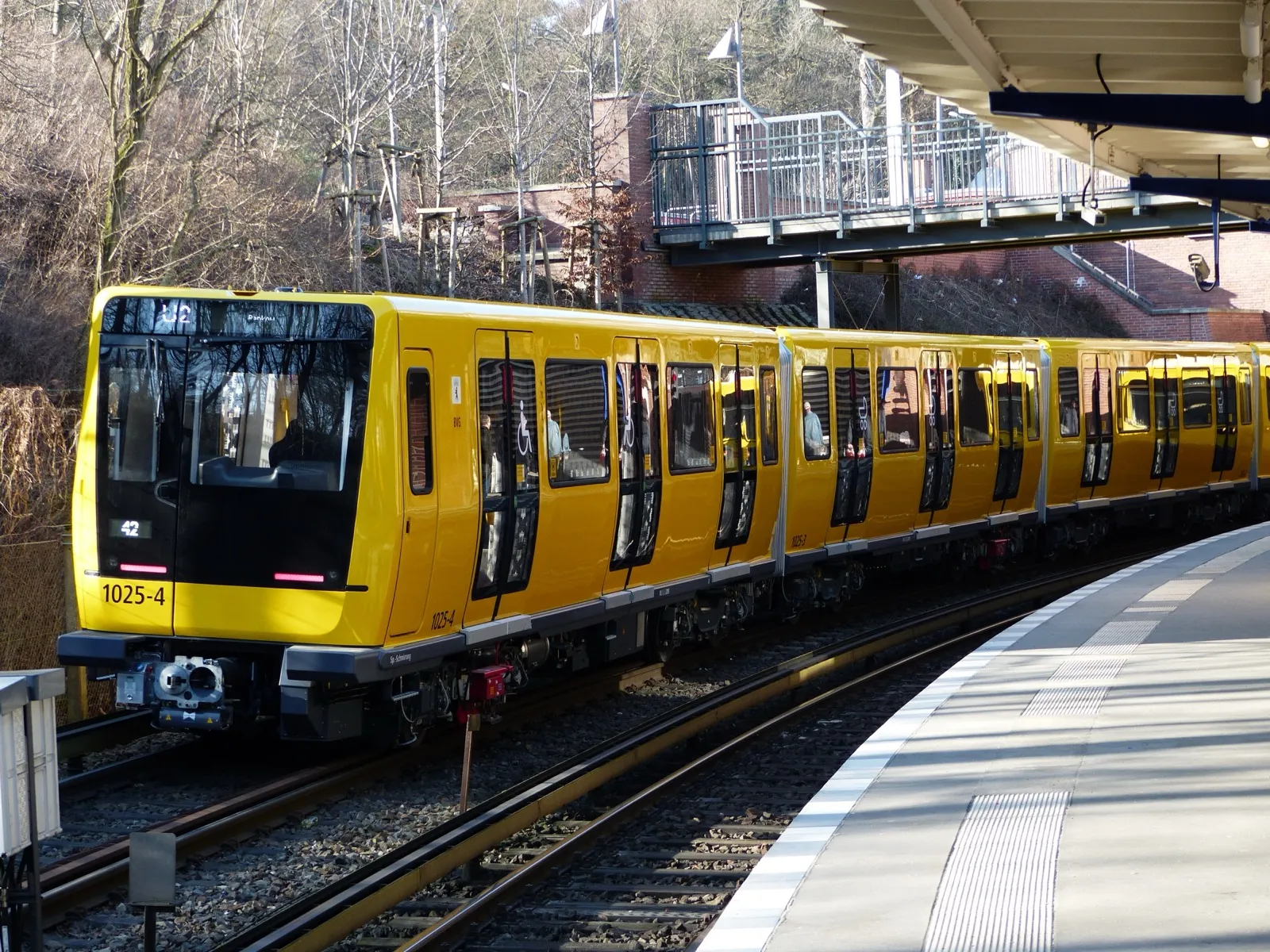 A Berlin U-Bahn train, Bahnsteigkante from bahninfo-forum.de / Wikimedia Commons (CC BY-SA 4.0)
When plans change
Delays are part of travel, and Verspätung is a word you will hear often. If your train is late, you may miss your Anschluss (connection) and need to umsteigen (change trains). Listen for the Durchsage, the announcement, which will tell you about delays, cancellations and changes of platform.
Der Zug hat zehn Minuten Verspätung.
The train is ten minutes late.
Der Zug fällt aus.
The train has been cancelled.
For the reverse, keep an ear out for einsteigen (get on) and aussteigen (get off), which you will hear when it is time to board and to leave the train. All the verbs here are separable, so the prefix jumps to the end: Ich steige in Köln um.
If you have a Reservierung (seat reservation), check the carriage number on your ticket before you board, as long trains are busy and the carriages are numbered.