
Germans call New Year’s Eve Silvester, after Pope Sylvester I, whose feast day falls on 31 December. It is a night for fireworks, a glass of Sekt at midnight and a surprising number of lucky charms. Here is a tour of the night, with the words you will hear.
Between the years
The days between Christmas and New Year are known as zwischen den Jahren, literally “between the years”. Many people are on holiday and the mood is relaxed. The turn of the year itself is the Jahreswechsel, and 1 January, Neujahr, is a public holiday.
Fireworks and a toast
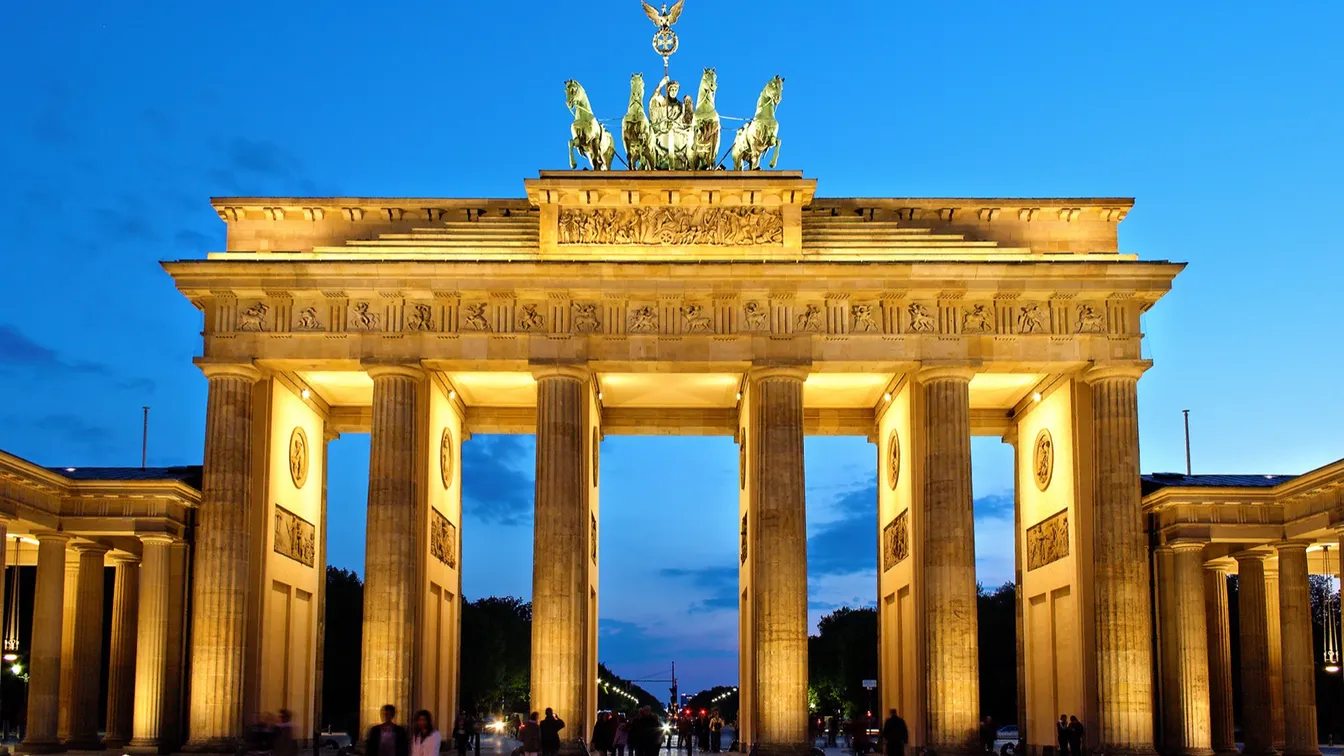
At midnight the sky fills with Feuerwerk. People let off Raketen (rockets) and Böller (firecrackers), and children hold a Wunderkerze (sparkler). In Berlin, the big public party at the Brandenburger Tor is one of the largest open-air New Year’s Eve celebrations in Germany.
Once the clock strikes Mitternacht, it is time to anstoßen, to clink glasses, usually with Sekt. Two phrases you will hear around then:
Um Mitternacht stoßen wir mit Sekt an.
At midnight we clink glasses with sparkling wine.
Hast du gute Vorsätze für das neue Jahr?
Do you have any resolutions for the new year?
Luck for the year ahead
Luck is a big part of Silvester. A Glücksbringer (lucky charm) is a popular small present, and the classics are the Glücksschwein, the lucky pig, and the Schornsteinfeger, the chimney sweep. The pig is so closely tied to good fortune that Schwein gehabt! means “what luck!”.
Another tradition is Bleigießen: you melt a small piece of metal, pour it into cold water and read the shape it makes as a forecast for the year. Many sets now use tin rather than lead, but the name has stayed. And in some households a bowl of Linsen, lentils, is eaten on the night in the hope that they will bring money.
Food
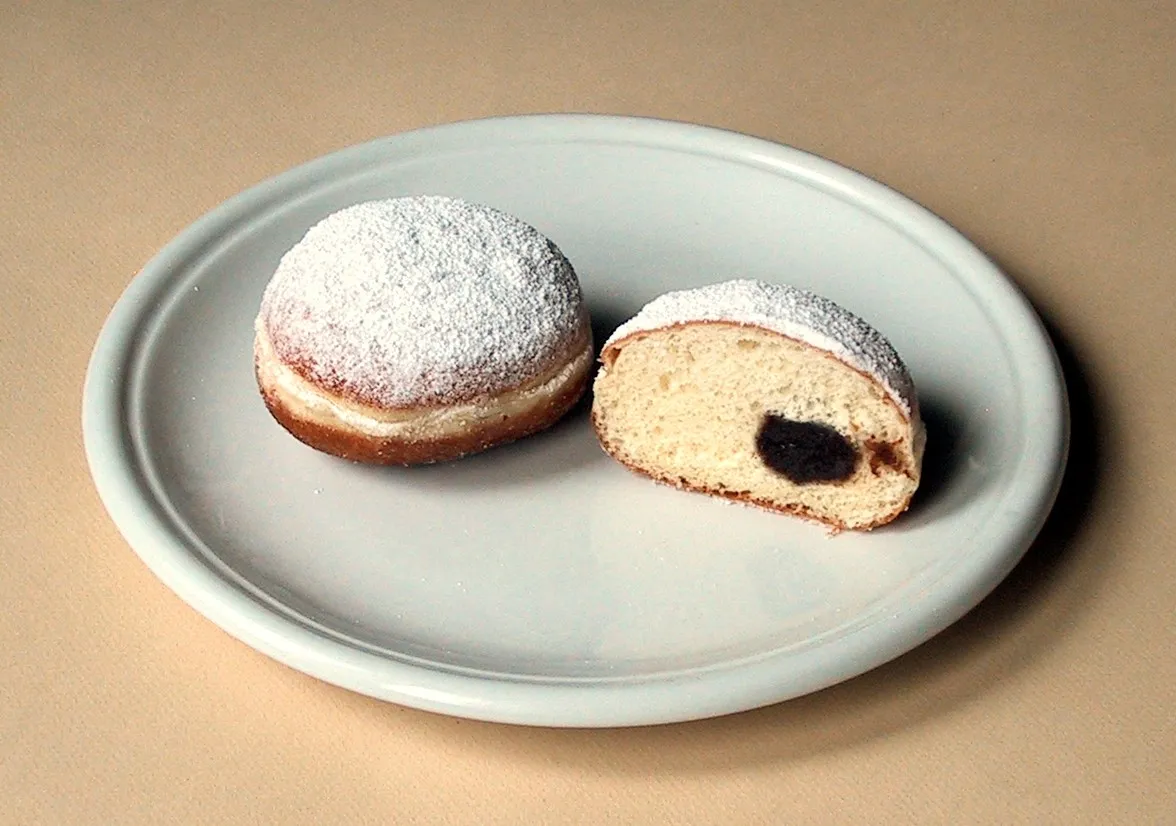 Berliner, User Rainer Zenz on de.wikipedia / Wikimedia Commons (CC BY-SA 3.0)
The classic Silvester treat is the Berliner, a jam-filled doughnut. The name depends on where you are: in the south it is a Krapfen, and in Berlin itself it is a Pfannkuchen (elsewhere that word means a pancake). Some people fill a few with mustard instead of jam as a New Year’s Eve prank. For dinner, raclette and fondue are popular, so you can eat slowly and stay at the table.
Dinner for One
One tradition that is odd to outsiders is a short English-language comedy sketch, Dinner for One, which has been shown on German television on New Year’s Eve for decades. Its line “The same procedure as every year” is known all over Germany, though the sketch is little known in Britain.
Two greetings to take away
Before the new year begins you can wish someone Guten Rutsch! It means “a good slide”, as in a smooth slide into the new year. From midnight on the greeting is Frohes neues Jahr!, “Happy New Year!”.
Guten Rutsch ins neue Jahr!
Have a good slide into the new year!
Frohes neues Jahr!
Happy New Year!