
Christmas in Germany starts well before the 25th. The weeks of Advent have their own words, foods and customs, and many of them travel straight into everyday vocabulary. Here is a tour through the season, with the words you will hear along the way.
Advent
Advent is the period leading up to Christmas, beginning on the fourth Sunday before it. The classic symbol is the Adventskranz, a wreath with four candles. Traditionally one more candle is lit on each Sunday, so by the fourth Sunday all four are burning.
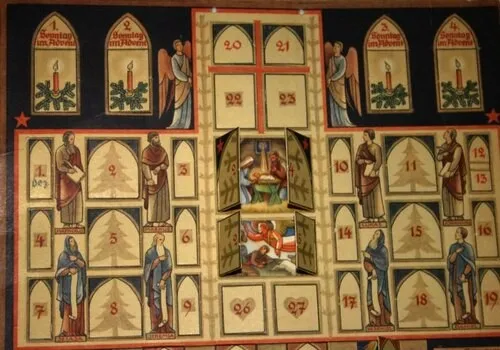 Advent calendar, Turris Davidica / Wikimedia Commons (CC BY-SA 3.0)
Children count down with an Adventskalender, which hides a small picture, chocolate or gift behind a door for each day from 1 December to Christmas Eve.
Der Nikolaus
On 6 December, Nikolaustag, children traditionally clean their boots and leave them outside the door the evening before. In the morning they find sweets, nuts or a small present inside. It is a separate occasion from Christmas, and the person who brings it is Nikolaus, not the Christmas gift-bringer.
Weihnachtsmärkte
From around the end of November, towns across Germany open their Weihnachtsmärkte. You can buy decorations and presents, and eat and drink the seasonal specialities: hot Glühwein, Lebkuchen and sweet gebrannte Mandeln (almonds coated in caramelised sugar). Two phrases you will hear there:
Gehen wir auf den Weihnachtsmarkt?
Shall we go to the Christmas market?
Einen Glühwein, bitte!
A mulled wine, please!
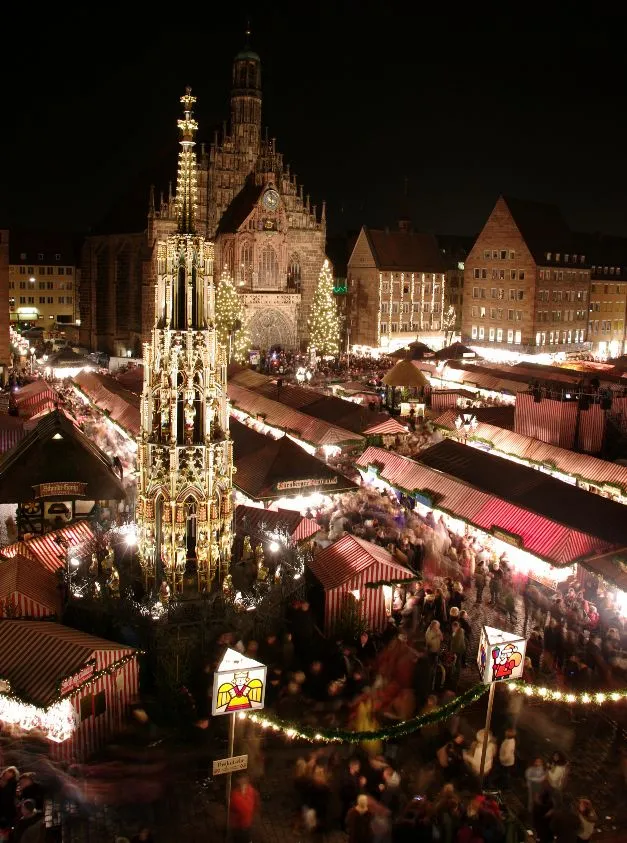 The Christkindlesmarkt in Nuremberg, Roland Berger (Wikimedia Commons, CC BY-SA 3.0)
 Lebkuchen, Cnbrb / Wikimedia Commons (CC BY-SA 4.0)
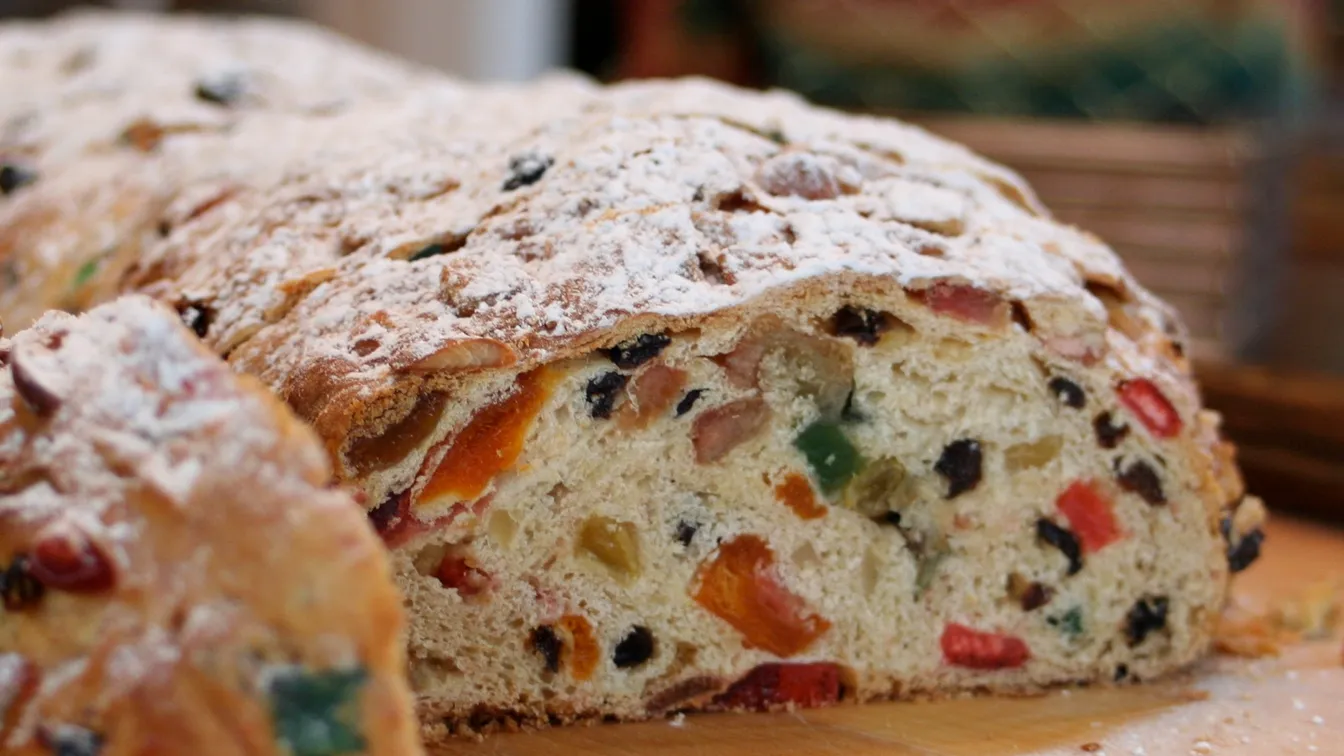
At home, many families bake Plätzchen, small biscuits, in Advent, and a Stollen is a rich, sugar-dusted fruit loaf that keeps for weeks.
Heiligabend
The main celebration is in the evening of 24 December, Heiligabend. Families traditionally light the candles on the Weihnachtsbaum, and then comes the Bescherung, when the presents are given out. Children ask long before the evening arrives:
Wann ist die Bescherung?
When do we get the presents?
Who brings the presents depends on the family and the region. In many households, particularly in the south, it is the Christkind; in others it is the Weihnachtsmann.
The 25th and 26th are the two public holidays, der erste and der zweite Weihnachtsfeiertag.
A greeting to take away
To wish someone a happy Christmas, say Frohe Weihnachten! (or Fröhliche Weihnachten!).